


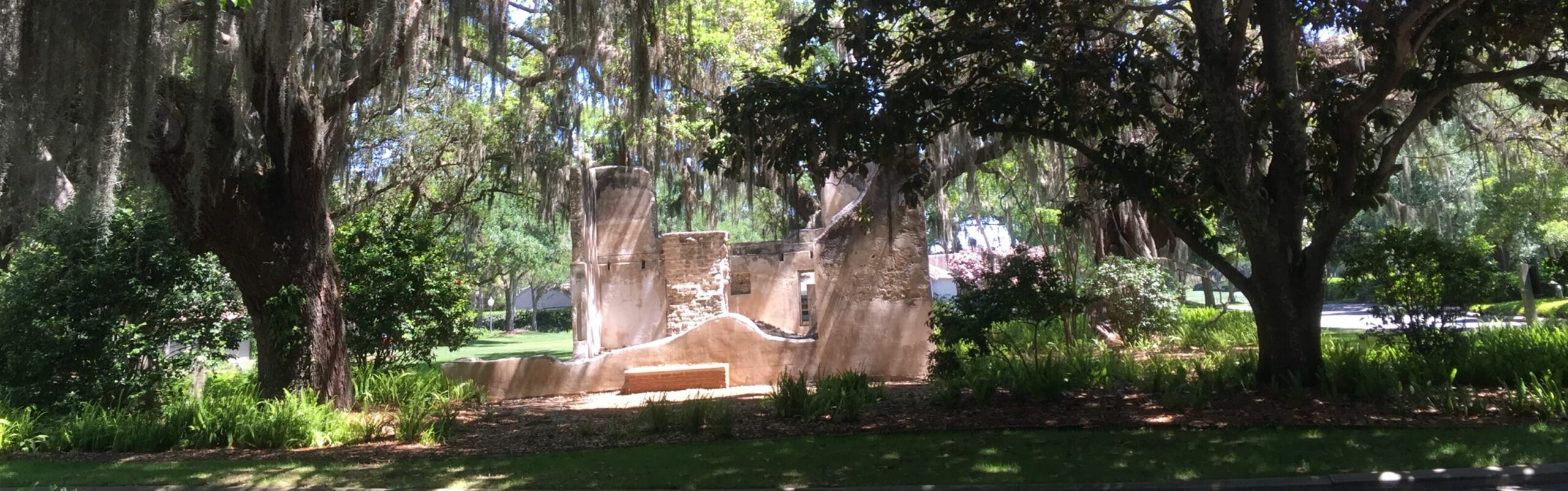
The area contains many historically significant sites including Fort Frederica established by James Oglethorpe in 1736, the St. Simons Island lighthouse originally built in 1810, and the Brunswick waterfront where Liberty Ships were constructed during WWII—and a story accompanies each location. Many Plantation-era structures remain and the beautiful Jekyll Island Historic District is rich with period architecture. The area is filled with historic structures and sites, many accompanied by detailed historic markers that make self-exploration and adventure.
St. Simons Island Points of Interest
With a rich history spanning from Native Americans to Spanish Missions to the Plantation Era, St. Simons Island has plenty of interesting and significant sights to explore.
CHRIST CHURCH
Explore area activities for you and your family. Take a walk on the beach and see the historic Light House on St. Simons Island, or maybe take a day trip to Jekyll Island and visit Driftwood Beach. Historic sites, entertainment, shopping, and restaurants..the Golden Isles has it all!
Just across from Christ Church is the Wesley Memorial Gardens—native Georgia plans surround an 18-foot Celtic cross that pays tribute to John and Charles Wesley, evangelicals who came to Georgia in 1736.

x
Historic Brunswick Sights & Architecture
With its city streets and squares still bearing colonial names like Gloucester, Newcastle and Norwich, the architecture is as classic as the names. Homes in Historic Downtown Brunswick reflect architectural styles including Queen Anne, Gothic, Italianate and Jacobean. Several civic buildings boast unique styles, notable architects and rich histories. A stroll through the Old Town uncovers the town’s history as told by the architectural detail
Brunswick Courthouse
701 G Street – Located in Magnolia Square, the courthouse was designed by New Jersey architect Charles Alling Gifford of the New York firm Gifford & Bates. Construction was completed in 1907. The Brunswick Courthouse is an example of Neoclassical Revival style (as seen in the window details) or Beaux Arts, combining ancient Greek & Roman forms with Renaissance ideas.
Brunswick Stew
With two towns competing as the creator of the popular Southern stew, its exact origin is still under debate. But around here, Brunswick, Georgia certainly holds the title of first and best Brunswick Stew over Brunswick County, Virginia.
Recipes for Brunswick Stew vary, but it is typically a tomato-based stew with local vegetables including lima beans, corn and okra along with meat. Some include potatoes, but its signature feature is its consistency—true Brunswick Stew must be thick. Brunswick Stew is typically made in large pots, simmering for long lengths of time.
Each October, Brunswick, Georgia celebrates its signature dish with the Brunswick Rockin’ Stewbille. Attendees taste and vote for the annual title of Best Brunswick Stew.
Jekyll Island Points of Interest
Thirty-three of the original winter homes of the wealthiest families in this country still stand, with many mansion-sized cottages now open to the public. Numerous service buildings have been converted to specialty shops or restaurants. The original Clubhouse has been restored and is currently in use as a resort hotel. The Historic District is located on the west side of Jekyll Island near the entrance to the Jekyll Island Causeway.

HORTON’S BREWERY SITE
The tabby ruins of Georgia’s first brewery are located on Riverview Drive. Built by Major Horton, an aide to General Oglethorpe, Georgia’s founder, the brewery supplied ale to troops and settlers at Fort Frederica on St. Simons Island.
CLAM CREEK PICNIC AREA
A scenic drive through moss-draped oaks and along the wide marshlands bounding Clam Creek leads to this popular picnicking spot that includes a large, covered fishing pier.
HORTON HOUSE
Located on Riverview Drive, this two-story ruin, dating from 1742, is one of the oldest standing tabby structures in the state. Tabby is a building material native to coastal Georgia having crushed oyster shells as its principal ingredient. Located nearby is the old du Bignon family cemetery.
FAITH CHAPEL
Tucked serenely away in a quiet corner of the Historic District is picturesque Faith Chapel. This small, wooden church, complete with gargoyles guarding its entrance, has an unusual warmth and charm. Built in 1904 for interdenominational worship, Faith Chapel was attended by the wealthy and powerful members of the Jekyll Island Club.